

Wrist injuries are among the most common reasons people seek orthopaedic advice after a fall or a knock during sport. A sudden landing on an outstretched hand, a collision on the field, or a simple trip can all result in pain, swelling and reduced movement, and in the early hours it can be genuinely difficult to know whether the injury is a sprain or a fracture. The two can feel remarkably similar at first, yet the right diagnosis matters, because a missed or poorly managed fracture can lead to ongoing pain, stiffness or longer term joint problems. This article looks at the key differences between a wrist sprain and a wrist fracture, what symptoms tend to point toward each, and when it is time to seek wrist fracture treatment rather than waiting to see how things settle.
What Is a Wrist Fracture?
A wrist fracture is a break in one of the bones making up the wrist joint, most commonly the distal radius, the scaphoid, or occasionally the ulna. The distal radius fracture is the most frequently seen type and typically results from a fall onto an outstretched hand.
The scaphoid, a smaller bone on the thumb side of the wrist, deserves particular attention because scaphoid fractures are notoriously easy to miss on an initial X-ray. In the first few days after injury, a hairline fracture through the scaphoid may simply not be visible, even though the bone is broken. This matters because the scaphoid has a limited blood supply, and a fracture left untreated carries a risk of avascular necrosis, where part of the bone loses its blood supply and begins to break down. For this reason, scaphoid fracture treatment often requires closer specialist input and, in some cases, surgical fixation. Other carpal bones can also fracture, though less frequently.
In children, a particularly common type of distal radius fracture is the buckle fracture, sometimes called a greenstick fracture. This occurs when the soft, still-developing bone compresses and bends slightly under load rather than breaking cleanly through, typically following a fall onto an outstretched hand during play or sport. Buckle fractures are generally stable, do not involve displacement, and tend to heal well with a period of splinting rather than a full cast or surgical intervention. While usually less concerning than other distal radius fractures, they still warrant proper assessment and imaging to confirm the diagnosis and rule out a more significant injury, since children's bones can be more difficult to interpret on X-ray than adult bones.
What Is a Wrist Sprain?
A wrist sprain involves injury to one of the ligaments that stabilise the wrist joint, rather than the bone itself. Ligament injuries are graded from Grade I, a mild stretch, through to Grade III, a complete tear. Sprains most commonly occur through forced hyperextension or a fall onto an outstretched hand, the same mechanism that can also cause a fracture, which is part of why the two are so often confused.
One ligament worth knowing about is the scapholunate ligament, which connects two of the small carpal bones and plays an important role in wrist stability. A missed scapholunate injury can lead to altered wrist mechanics over time if not identified and managed appropriately.
Symptoms of Wrist Fractures and Sprains and How to Tell the Difference
Fractures and sprains share overlapping symptoms, including pain, swelling, bruising and restricted movement, which is exactly why the two are so often mistaken for one another in the first day or two after injury.
That said, certain features point more strongly toward a fracture: visible deformity, rapid and severe swelling within minutes, an audible crack or snap felt at the time, constant pain that does not ease at rest, or numbness and tingling spreading into the fingers. Tenderness directly over the anatomical snuffbox, the small hollow on the thumb side of the wrist, is a particularly important sign, as it is closely associated with scaphoid fractures.
Because symptoms can overlap so heavily, self-diagnosis based on how the wrist looks or feels is unreliable, and imaging remains essential to confirm what has actually happened to the bone and surrounding structures.
Why Imaging Matters When Diagnosing Wrist Injuries
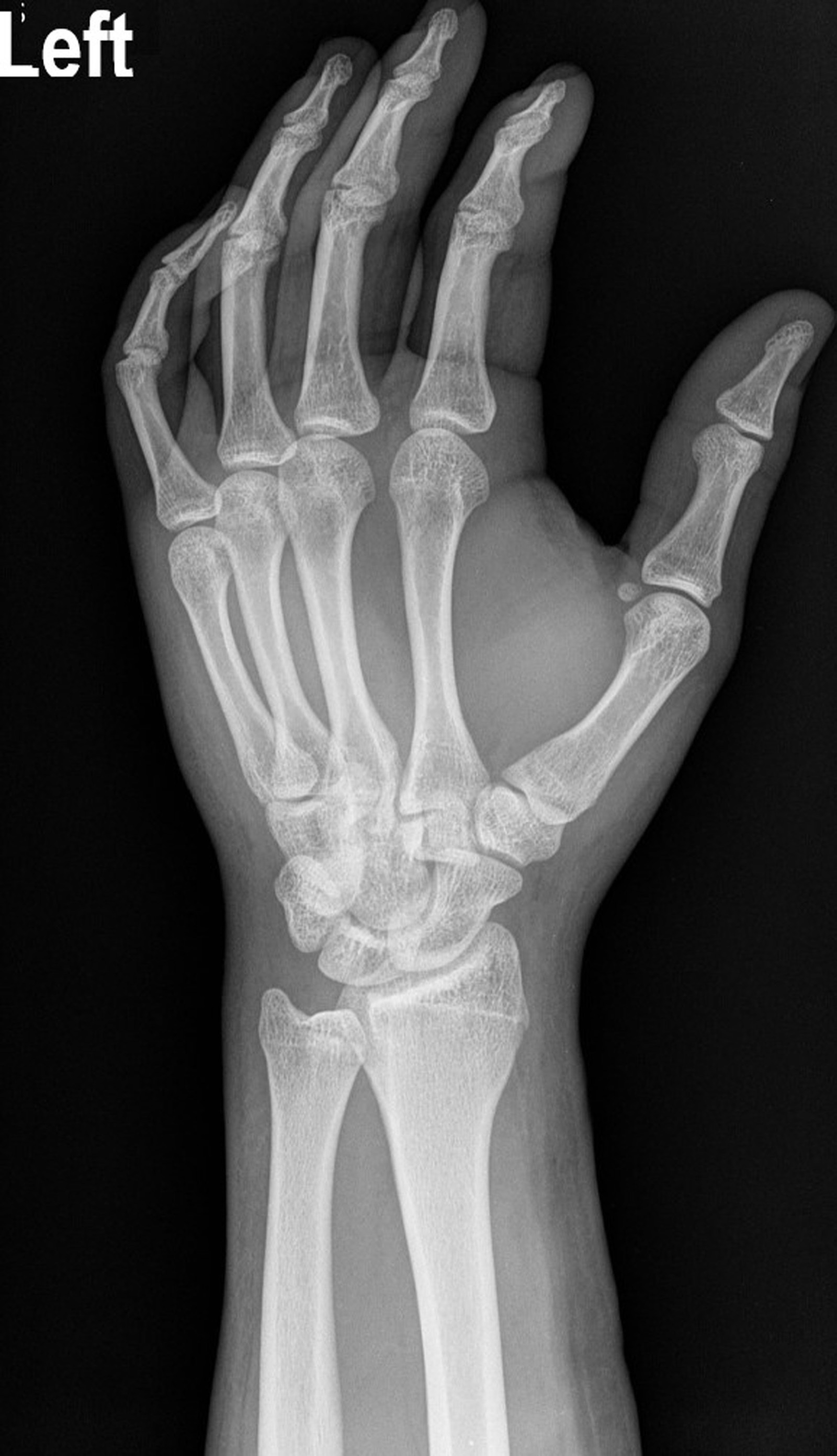
X-ray remains the first-line investigation for any suspected wrist fracture, as it is widely available and quick to perform. However, X-ray has known limitations for scaphoid fractures, particularly in the first few days, when a fracture line may not yet be visible. Where clinical suspicion remains high despite a clear initial X-ray, further imaging such as MRI or CT may be needed to confirm or exclude a fracture.
Ligament sprains do not show up on X-ray at all, as this imaging captures bone rather than soft tissue. If an X-ray is clear but symptoms persist, MRI or ultrasound may be appropriate to assess the ligaments directly.
Wrist Fracture Treatment Options

- Conservative management. Stable, undisplaced fractures are often managed with casting or splinting, followed by review imaging, with duration guided by the treating surgeon.
- Surgical fixation. Surgery may be indicated where a fracture is displaced, involves the joint surface, or fails conservative management. Distal radius fractures often require plates and screws, while scaphoid fractures commonly use a headless compression screw to protect the bone's blood supply.
- Rehabilitation. Hand therapy helps restore range of motion and grip strength once healing has progressed, with timing guided by the treating surgeon to avoid stressing the injury too early or allowing stiffness to set in.
Recovery timeframes vary by injury, and guidance on return to work or sport is best discussed directly with your treating surgeon as part of an individualised plan, rather than relied upon as a fixed timeline.
Patient Case Study
A 23 year old netball player fell onto her right wrist during a game. The pain was not severe enough to stop her finishing the match, and over the following days she noticed a persistent ache rather than any dramatic swelling or deformity. An X-ray with her local medical provider soon after the injury did not show a fracture, and she was advised on getting a soft splint from the chemist for comfort while the ache settled.
Ten days on, the discomfort had not improved, prompting a review through our online orthopaedic clinic. Given the ongoing symptoms despite a clear initial X-ray, a CT scan was arranged, revealing a scaphoid fracture not visible on the earlier imaging.
Because the fracture was displaced, urgent surgery was arranged to fix the bone. This case illustrates why a normal early X-ray does not always rule out a scaphoid fracture, and why ongoing wrist pain after an injury, even when initial imaging looks clear, warrants further review rather than being managed as a simple sprain. Online orthopaedic consultations with AVA Orthopaedics provide specialist advice and early direction in situations such as these.
What to Expect at Your Online Orthopaedic Consultation
An online consultation begins with a discussion of how the injury occurred and the symptoms since, along with review of any imaging already performed. Where imaging has not yet been arranged, this can usually be coordinated locally. The consultation focuses on interpreting the history and imaging to outline an appropriate pathway, whether conservative care, referral for hands-on assessment with a local provider, or surgical input, without needing to travel for an initial opinion.
When to See an Online Orthopaedic Specialist
Certain signs warrant prompt review rather than a wait-and-see approach, including visible deformity (should go straight to an Emergency Department), snuffbox tenderness, numbness or tingling, pain not settling after a few days, or any injury where a fracture has not been clearly excluded on initial imaging. This is particularly important for suspected scaphoid fractures, where delayed diagnosis carries a meaningful risk to the long-term health of the bone, as illustrated above.
This applies broadly across groups including netball, football and other contact sport players, older adults with more fragile bone density, and anyone in a physically demanding job who has had a fall onto an outstretched hand. If you are unsure whether your wrist injury is a sprain or something more serious, an online assessment with an orthopaedic specialist offers a straightforward way to get clarity without delay.
Get Your Wrist Injury Assessed Online

You do not need to wait to find out whether your wrist injury is serious. AVA Orthopaedics offers online assessments so you can receive structured orthopaedic advice without delay. Whether you are concerned about a possible fracture, a persistent sprain, or a wrist injury that has not settled, an online consultation allows a specialist to review your symptoms and imaging and guide you toward the right treatment pathway.
Get your wrist injury assessed online today.