

What Is an Achilles Tendon Rupture?
An Achilles tendon rupture is a tear of the tendon that joins the calf muscles to the heel bone. The Achilles is the thickest tendon in the body and carries substantial load with every step, particularly during push-off. When it tears, the connection between the calf muscles and the foot is interrupted, and the ability to drive the foot downward is lost or significantly reduced. This is why the injury has such an immediate effect on walking.
Ruptures are described as either complete, where the tendon has torn through its full thickness and the two ends have separated, or partial, where a proportion of the fibres remain intact. The distinction matters a great deal. A complete rupture will not restore its own continuity without the tendon ends being held in a position that allows them to knit, whether that is achieved surgically or through carefully staged immobilisation. A partial tear may respond to a different approach entirely. Establishing which of the two has occurred, and how far the tendon ends have separated, is one of the first priorities after injury and shapes every decision that follows.
Most ruptures occur during recreational sports involving sudden pivoting, jumping or pushing off. Basketball, tennis, football and badminton are the settings seen most often, largely because they combine explosive acceleration with rapid changes of direction. A common description is the sensation of being struck or kicked in the back of the ankle, followed by turning around to find that nobody is there.
This guide covers the symptoms of an Achilles tendon rupture, the causes and the factors that increase risk, how the injury is diagnosed, the treatment options available, and what the recovery process generally involves.
Achilles Tendon Rupture Symptoms
Achilles tendon rupture symptoms tend to appear immediately and are usually difficult to ignore. The classic presentation includes:
- A sudden, sharp pain in the back of the ankle or calf
- An audible pop or snap at the moment of injury
- Swelling and bruising around the heel and ankle
- Difficulty walking, or an inability to walk normally
- Weakness, or an inability to push off the foot or stand on tiptoe
- A gap or dent that can be felt in the tendon a few centimetres above the heel
Not every rupture presents with all of these features. The initial pain often settles considerably within the first few hours, and some people find they can still walk, because other muscles in the lower leg partially compensate for the loss. This combination can be misleading. It is one of the reasons Achilles ruptures are sometimes assumed to be a calf strain or a minor sprain, and why assessment is occasionally delayed by days or weeks.
The features that most warrant prompt attention are the loss of push-off strength, an inability to raise onto the toes on the affected leg, and a palpable gap in the tendon. If you recognise this pattern, it is worth having the injury assessed without delay rather than waiting to see whether it settles. An online video consultation is one way to have a suspected rupture reviewed by an orthopaedic specialist without first needing to secure an in-person appointment.
Causes of Achilles Tendon Rupture

In most cases, Achilles tendon rupture is caused by a sudden, forceful load through the tendon during pivoting, jumping, or explosive push-off. The tendon is loaded faster and harder than it can tolerate, and it gives way. In many cases, the tendon was already carrying some degree of underlying wear, so the injury is not always a matter of force alone.
Common scenarios include recreational and social sport, particularly basketball, tennis, badminton and football, where stop-start movement and rapid direction change are constant demands. Sudden acceleration from a standing start, an awkward landing, or a change of direction on a planted foot are frequent mechanisms. Ruptures also occur outside sport entirely, through falls or missteps, such as stepping unexpectedly into a hole, off an unseen edge, or down a step that was not noticed.
Several factors are associated with increased risk:
- Age, with ruptures most common between 30 and 50, particularly in people playing sport recreationally rather than regularly
- A history of Achilles tendon pain or tendinopathy, which can indicate existing changes within the tendon
- Use of fluoroquinolone antibiotics, or corticosteroid use
- Sudden increases in training intensity, frequency or duration without adequate conditioning
The pattern that emerges most often is a person who was active in their twenties, remains reasonably fit, and now plays sport once a week rather than several times. The tendon is subjected to intermittent high demand without the consistent loading that builds tolerance. Returning to sport after a long break, or increasing training sharply in a short period, places the tendon under exactly this kind of stress.
How Is an Achilles Tendon Rupture Diagnosed?
Diagnosis begins with a detailed clinical history. The mechanism of injury, what was heard or felt at the moment it happened, whether weight bearing was possible immediately afterwards, and what function has been lost since are all informative. A history of preceding tendon pain is also relevant, as is any recent medication use.
During an online video consultation, the specialist takes a full history and guides the patient through what they are able to demonstrate on camera. This may include attempting to rise onto the toes, the resting position of the foot compared with the uninjured side, the pattern and location of swelling and bruising, and whether a visible gap can be identified along the tendon. What a patient can and cannot do, observed directly, carries meaningful diagnostic information.
Imaging is used to confirm a suspected rupture and to assess the extent of the tear. Ultrasound is often the first investigation, as it can show whether the tendon is torn, whether the tear is complete or partial, and how far the ends have separated. MRI may be used where the picture is less clear or where more detail is needed. Imaging can be arranged locally, wherever the patient is in Australia, and the results reviewed remotely by the AVA Orthopaedics specialist.
Early assessment matters for a practical reason. The window in which certain treatment options remain available is relatively narrow, and it closes as the tendon ends retract and scar tissue forms in the gap between them. A rupture identified in the first days after injury presents a different set of options from one identified several weeks later, and delayed diagnosis is associated with a more complex path. Online consultation appointments are available on a same-day basis subject to availability, which allows a suspected rupture to be reviewed and next steps set in motion without a prolonged wait.
Achilles Tendon Rupture Treatment Options
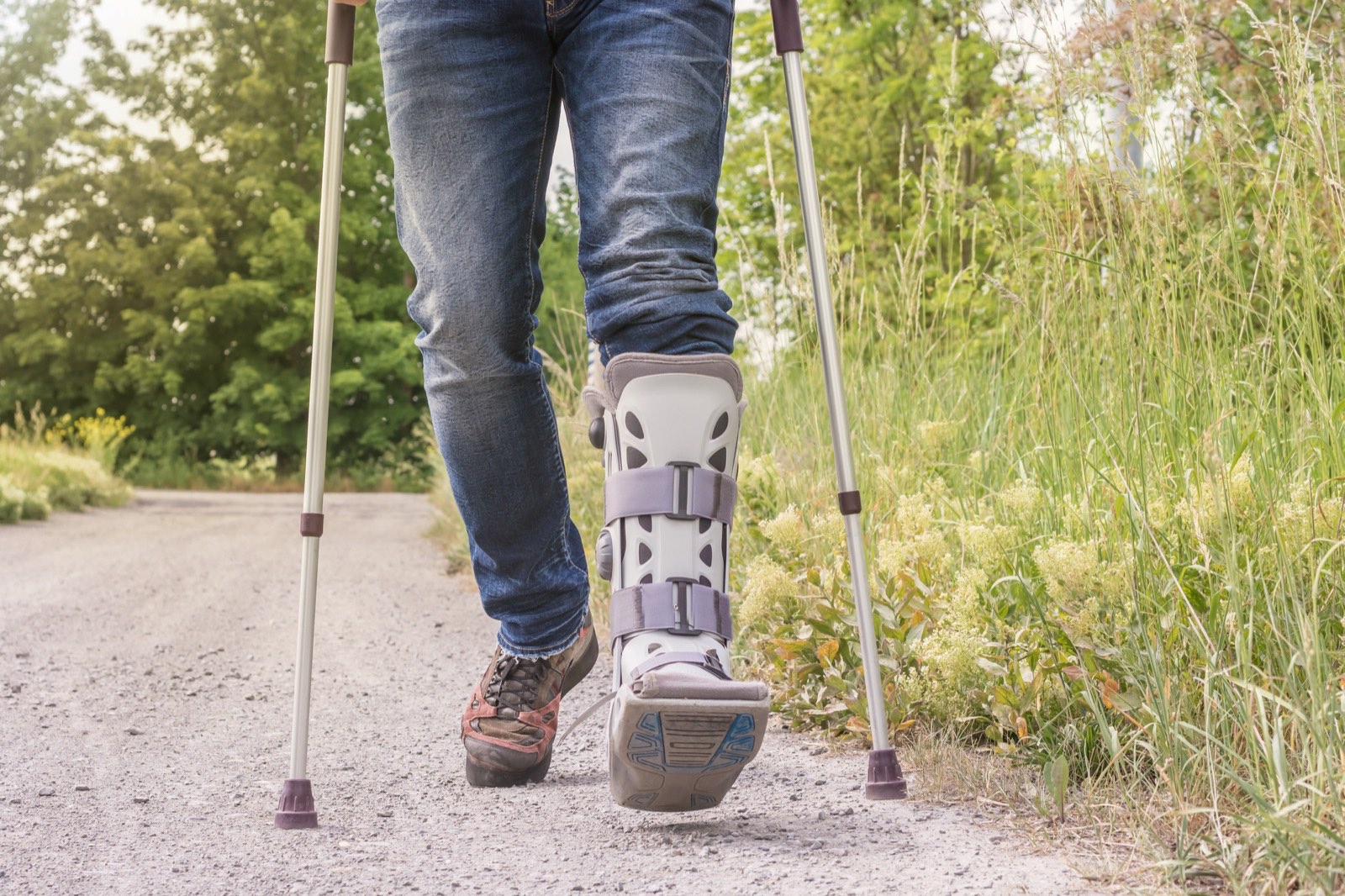
Achilles tendon rupture treatment follows one of two broad pathways, and the decision between them is made together with the specialist.
Non-surgical management involves immobilisation in a boot, using a structured heel lift protocol. The foot is initially held with the toes pointed downward, which brings the torn tendon ends closer together, and the heel lift is then reduced in stages over a period of weeks as healing progresses and the ankle is gradually brought back toward a neutral position. This staging is not arbitrary. Reducing the lift too quickly places load on tissue that is not ready for it, and reducing it too slowly has its own consequences. The immobilisation phase is followed by physiotherapy to rebuild calf strength and restore normal function.
Surgical repair involves direct suturing of the torn tendon ends so that they are held in continuity while healing occurs. It is generally considered for complete ruptures, and for patients with higher activity demands or specific functional requirements.
Surgery is followed by a structured rehabilitation program that shares many features with the non-surgical pathway, including a period of protected weight bearing and a staged return to loading.
The choice between these pathways depends on several factors. Whether the tear is complete or partial, and the degree of separation between the tendon ends, are central considerations. The patient's age, activity level, occupational demands and general health all contribute, as does the time elapsed since the injury occurred. Each pathway carries its own profile of considerations and risks, and these are discussed as part of the decision rather than presented as a single recommended option.
Assessment soon after injury allows these decisions to be made while the full range of options is still open, and reduces the period spent uncertain about what has happened and what should happen next. Following the online consultation, AVA Orthopaedics can coordinate the next steps, including imaging, in-person follow-up, referral for a surgical opinion where that is indicated, and communication with the patient's general practitioner.
Achilles Tendon Injury Recovery and Rehabilitation Timeline
Recovery from an Achilles tendon rupture is staged, and the stages apply to both treatment pathways in broadly similar form.
The first phase is protection and immobilisation, during which the tendon is held in a position that allows the ends to heal and load is deliberately limited. The second phase introduces progressive weight bearing, with the boot adjusted in stages and walking gradually resumed. The third phase is active rehabilitation, focused on restoring calf strength, rebuilding the tendon's tolerance to load, and re-establishing normal walking mechanics. Calf strength in particular tends to take longer to return than people anticipate, and this phase is where much of the functional recovery is made. Return to sport is the final stage and is approached gradually, with running typically reintroduced well before pivoting or jumping.
Recovery is measured in months rather than weeks. The specific timeline varies considerably depending on the treatment pathway chosen, the nature of the tear, the stage at which it was identified and individual factors including age and baseline fitness. Your treating surgeon is best placed to advise on the timeline that applies to your circumstances, and on when each stage should progress.
Consistent follow-up supports rehabilitation. Much of that review can be conducted by telehealth, which allows progress to be monitored, questions to be answered and the rehabilitation plan to be adjusted without repeated travel to appointments.
Achilles Tendon Specialists in Australia: Why See a Specialist?

An Achilles tendon rupture affects mobility directly, and the decisions made in the days following the injury shape the pathway that follows. Specialist orthopaedic input helps clarify what has occurred, whether the tear is complete or partial, which treatment options apply, and what the sequence of next steps should be. It also helps distinguish a rupture from the injuries it is commonly mistaken for, which matters because the management is quite different.
Finding an Achilles tendon specialist in Australia can be difficult outside the major cities, where wait times and travel distances add to the delay. AVA Orthopaedics provides orthopaedic specialist consultations by online video, with appointment availability across Australia, including for patients in regional and remote areas. Assessment is history-based and imaging-based, drawing on the injury history, what the patient is able to demonstrate on video, and imaging arranged locally. Any hands-on examination is coordinated through a local provider.
Book an Online Consultation for Your Achilles Tendon Injury
For clarity on your Achilles tendon injury and the treatment pathway ahead, contact AVA Orthopaedics for an online video consultation. Specialist assessment is accessible from anywhere in Australia, without requiring an in-person visit to begin.