

A Grade III ankle ligament tear represents complete rupture of one or more ligaments within the lateral complex. Complete ligament rupture can produce genuine structural instability that, if not formally assessed and managed with specialist direction, carries a risk of chronic ankle instability, recurrent injury and long-term joint degeneration.
This guide addresses what a Grade III ankle ligament tear actually means, how it is diagnosed, what conservative management involves and what a structured rehabilitation pathway looks like from acute injury through to return to sport.
AVA Orthopaedics provides specialist online orthopaedic consultations via secure video for patients anywhere in Australia. Same-day and next-day appointments are frequently available, ensuring specialist input at the most critical early stage of management.
Anatomy of the Lateral Ankle Ligament Complex: What Ruptures in a Grade III Injury
The lateral ligament complex consists of three distinct ligaments. The anterior talofibular ligament (ATFL) is the primary lateral stabiliser and the most commonly ruptured structure in Grade III injuries, as it is the first restraint stressed in an inversion mechanism. The calcaneofibular ligament (CFL) resists inversion stress across both the ankle and subtalar joint and is frequently ruptured alongside the ATFL in complete lateral complex injuries. The posterior talofibular ligament (PTFL) is the strongest of the three and is rarely disrupted except in the most severe presentations.
When one or more of these ligaments is completely ruptured, the passive restraints against forward talar displacement and inversion stress are lost, producing the gross mechanical instability that characterises a Grade III injury. The medial deltoid ligament complex and the syndesmotic ligament complex, involving the tibiofibular joint, both require specific assessment in the context of a severe ankle injury to exclude concurrent structural damage.
In a Grade III injury, the structural failure is complete. This distinguishes it fundamentally from the partial disruption of a Grade II tear and makes early specialist review an essential step in management.
Understanding Grade III Tears Within the Ankle Ligament Grading System
Grade I: Microscopic Fibre Disruption
Microscopic collagen fibre damage with intact gross architecture. Minimal swelling, no joint instability and weight-bearing preserved. Managed with activity modification and structured rehabilitation.
Grade II: Partial Ankle Ligament Tear
Partial macroscopic tear with the ligament remaining in continuity. Moderate swelling, bruising and mild to moderate laxity with a discernible endpoint. Managed with bracing/ boot, physiotherapy and criteria-based return to sport.
Grade III: Complete Ankle Ligament Rupture
Complete disruption of ligament continuity, with loss of structural integrity. Significant swelling, bruising and gross laxity with an absent or very soft endpoint on clinical stress testing. Inability to bear weight is common in the acute phase. Functional instability during directional changes, pivoting and movement on uneven ground. Managed with CAM boot, structured physiotherapy and gradual return to sport.
What Does Complete Ankle Ligament Rupture Actually Mean?
In a Grade III injury, the entire cross-sectional area of the ligament has been disrupted. There is no remaining structural continuity to provide passive restraint to the joint. The mechanical consequence is that the talus can translate forward within the mortise and tilt into inversion without the normal ligamentous check, producing the giving-way sensation that patients with complete ruptures describe.
Complete rupture also disrupts the ligament's proprioceptive nerve endings more extensively than a partial tear. Significant deficits in joint position sense and neuromuscular reaction time persist well beyond the period of pain and swelling, and addressing these deficits is central to any Grade III rehabilitation program.
Associated injuries are substantially more common in Grade III presentations than in lower-grade injuries. Osteochondral lesions of the talar dome are present in a clinically significant proportion of complete lateral ligament ruptures and are a primary driver of long-term ankle pain if not identified and addressed. Peroneal tendon longitudinal tears or subluxation can occur concurrently. Avulsion fractures at the fibular tip, fifth metatarsal base or anterior calcaneal process are also common. Syndesmotic injury may coexist with a severe lateral ligament rupture. Identifying these associated injuries and those at risk of them by an experienced orthopaedic specialist is important for long-term prognosis.
Causes and Mechanisms of a Grade III Ankle Ligament Tear
A Grade III injury is produced by a high-energy inversion and plantarflexion mechanism generating forces sufficient to cause complete ligament rupture. Common scenarios include high-velocity sporting contact, landing from height onto a severely inverted foot, stepping into a hole at speed or a significant twisting fall. In Australian sport, Grade III tears occur with particular frequency in basketball, netball, AFL, soccer, rugby and volleyball.
Grade III injuries occur more often than they should in athletes who have experienced previous ankle sprains that were not fully rehabilitated. Residual mechanical or functional instability lowers the threshold for complete failure under load. Chronic ankle instability, generalised joint hypermobility and significant peroneal muscle weakness or delayed neuromuscular activation all increase vulnerability to complete rupture under forces that would produce only a Grade I or II injury in a well-conditioned ankle.
External rotation of the foot under load adds syndesmotic stress to any ankle trauma, and in the context of a Grade III lateral injury, this creates meaningful risk of a concurrent high ankle sprain that requires separate assessment and management direction.
Symptoms of a Grade III Ankle Ligament Tear
Patients typically report severe immediate pain at the moment of injury, though a proportion of complete ruptures are paradoxically less painful than expected because complete disruption of the ligament also disrupts the pain-conducting fibres within it. Dramatic swelling develops rapidly, often within the first one to two hours, extending beyond the lateral ankle to involve the entire ankle and hindfoot. Significant bruising appears within twenty-four to forty-eight hours and frequently tracks extensively into the lateral foot, forefoot and sole.
Inability or near-inability to bear weight in the acute phase is common. Patients describe instability; the ankle feels unreliable and gives way with any attempt at weight-bearing on uneven ground or during directional movement. This combination of dramatic swelling, extensive bruising, inability to bear weight and functional instability distinguishes a Grade III presentation from the moderate findings of a Grade II injury and warrants prompt specialist assessment rather than a watch-and-wait approach.
How Is a Grade III Ankle Ligament Tear Diagnosed?
A thorough clinical history covers the mechanism of injury, the speed and character of symptom onset, weight-bearing capacity and any prior history of ankle instability or previous sprains.
Physical examination findings used to assess Grade III injuries, including the anterior drawer test, the talar tilt test, the squeeze and external rotation stress tests for syndesmotic injury and assessment of peroneal tendon continuity, may have been performed by a referring GP or physiotherapist and can be reviewed in context within the specialist consultation.
An X-ray guided by the Ottawa Ankle Rules is also standard to exclude malleolar fractures, fifth metatarsal fractures and calcaneal anterior process avulsion. MRI is the gold-standard imaging investigation undertaken when suspicion arises of syndesmotic ligament injury or when ankle rehabilitation is not progressing as expected. CT imaging is indicated when complex bony injury or osteochondral lesion characterisation is required to inform management planning.
AVA Orthopaedics specialist consultations via secure video include comprehensive imaging review, as needed, and clinical history assessment, enabling specialist diagnostic interpretation and clear management direction for patients anywhere in Australia.
Conservative Management for Ankle Ligament Tears: The Foundation of Grade III Recovery
The great majority of isolated Grade III lateral ankle ligament injuries can be successfully managed conservatively, with outcomes that allow a full and confident return to sport and activity. Conservative management is not a lesser option; it is the appropriate first-line approach for most presentations, supported by a structured functional rehabilitation protocol directed by an orthopaedic specialist.
Early management centres on protected weight-bearing in a below-knee walking boot. As swelling resolves and weight-bearing confidence returns, a progressive transition to a semi-rigid functional brace supports ongoing recovery. The pace of this transition is guided by the patient's symptoms and functional progress rather than a fixed timeline. Alongside bracing, a physiotherapy program that addresses strength, range of motion, and proprioception provides the structural foundation for a return to sport.
The majority of patients with isolated Grade III injuries managed conservatively achieve satisfactory stability and functional recovery. Persistent instability, recurrent giving-way episodes, or failure to meet return-to-sport criteria warrant further specialist review and reassessment of the management approach. An AVA Orthopaedics consultation provides that review and a clear path forward.
Structured Rehabilitation Pathway For Ankle Ligament Tears: From Acute Injury to Return to Sport
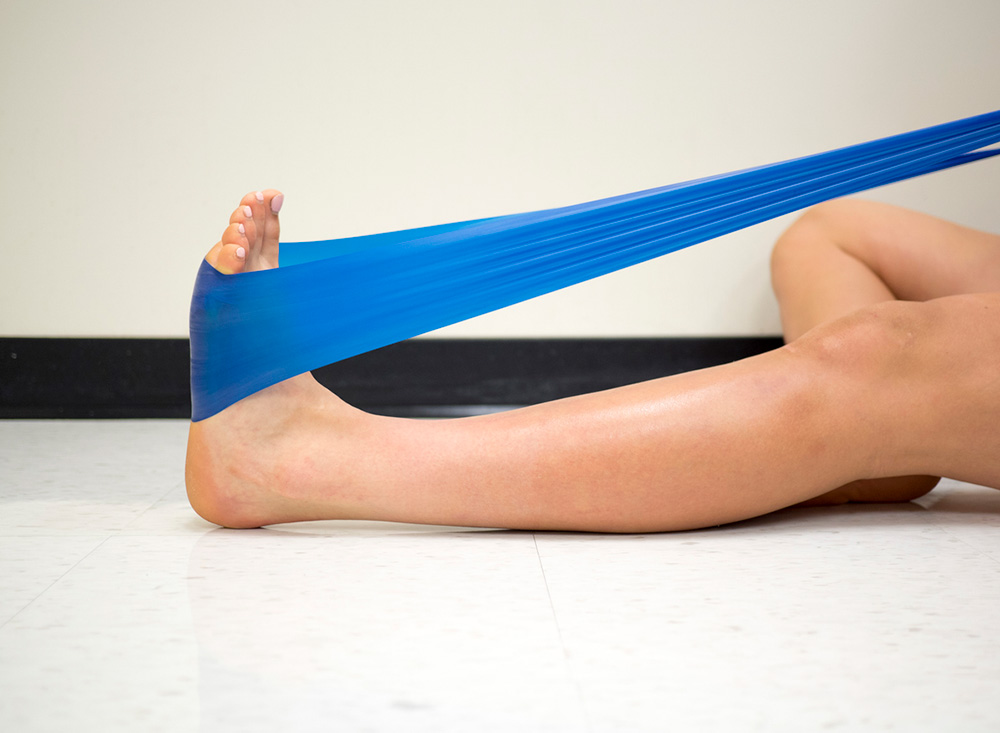
A structured and supervised rehabilitation pathway is the most important determinant of long-term outcome following a Grade III ankle ligament tear.
Phase 1: Acute Protection and Swelling Management, Weeks 1 to 2
A below-knee walking boot with crutches as required for weight-bearing assistance forms the basis of early protection. The PRICE protocol is applied throughout: protection, relative rest, ice, compression and elevation. HARM factors- heat, alcohol, running and massage- are avoided in the first 72 hours. Gentle non-weight-bearing range-of-motion exercises within a pain-free arc begin early to prevent excessive stiffness. Appropriate analgesia supports comfort.
Phase 2: Restoration of Motion and Early Strengthening, Weeks 2 to 6
Progressive transition from the walking boot to a functional lace-up brace occurs as swelling resolves. Active range-of-motion restoration targets ankle dorsiflexion, plantarflexion, inversion, and eversion. Peroneal and calf strengthening commences under physiotherapy supervision. Early proprioceptive retraining on stable surfaces is introduced. Hydrotherapy can be a useful adjunct during this phase for early functional retraining in a reduced-load environment.
Phase 3: Progressive Strengthening and Proprioceptive Retraining, Weeks 6 to 12
Progressive resistance training targets the peroneal muscles, calf complex, and hip and gluteal musculature to address the entire lower-limb kinetic chain. Proprioceptive training advances to unstable surfaces, including balance board and wobble cushion work. Straight-line jogging is introduced when full pain-free weight-bearing and adequate dynamic strength are confirmed. Gait retraining normalises running mechanics.
Phase 4: Functional Rehabilitation and Return-to-Sport Milestones, Months 3 to 6

Cutting, pivoting and reactive agility drills are introduced progressively alongside sport-specific movement retraining relevant to the patient's activity demands. Return to full competition requires meeting objective criteria: full pain-free range of motion symmetrical with the uninjured side, peroneal strength symmetry of at least 90 percent, single-leg hop and figure-of-eight run symmetry and successful completion of sport-specific reactive agility tasks without pain, apprehension or instability. Formal return-to-sport clearance from the treating orthopaedic specialist is required. Prophylactic bracing for the first full competitive season following return to sport is recommended.
High Ankle Sprain Treatment: Excluding Syndesmotic Injury in Grade III Presentations
Syndesmotic assessment is mandatory in the evaluation of every Grade III ankle ligament tear. A missed syndesmotic injury in the context of a severe lateral ligament rupture is a common cause of prolonged pain, failed conservative management and the need for delayed intervention.
Concurrent syndesmotic injury presents with pain proximal to the ankle joint and lower leg, a positive squeeze test, pain with external rotation stress and prolonged difficulty pushing off through the forefoot. In the context of a Grade III lateral injury, high ankle sprain management requires strict protected weight-bearing for incomplete syndesmotic injuries, with the extent and duration of protection determined by specialist assessment and imaging findings. Some syndesmotic injuries may require surgical intervention to stabilise the tibiofibular joint.
Differentiating isolated lateral ligament rupture from a combined lateral and syndesmotic injury requires specialist assessment and appropriate imaging review. The distinction has direct implications for the management plan and the projected recovery timeline.
Accessing Specialist Orthopaedic Care From Anywhere in Australia

Patients with a Grade III ankle ligament tear are frequently discharged from the emergency department with a walking boot, basic analgesia and instructions to follow up with their GP, without a clear specialist management plan. The clinical consequences of that gap are meaningful: delayed longer-term management decision-making, inadequate bracing guidance and no structured physiotherapy referral with defined milestones. In a Grade III injury, early specialist direction matters.
AVA Orthopaedics provides specialist online orthopaedic consultations via secure video, delivering the same standard of clinical assessment and management direction as an in-person appointment. For patients in regional, rural and remote areas of Australia where local subspecialty orthopaedic services may be unavailable, this means specialist-level care without the need for significant travel.
An AVA Orthopaedics online consultation for a Grade III ankle injury delivers injury assessment based on clinical history and imaging review, further imaging arranged and interpreted if required by an orthopaedic specialist, specific bracing and load management guidance, and a physiotherapy referral with a written rehabilitation pathway and return-to-sport milestones.
Book an Online Orthopaedic Assessment for Specialist Advice, Treatment Direction and Clarity
A Grade III ankle ligament tear raises important and immediate questions: how severe is the injury, what is the right management approach, and how do I access specialist care without waiting weeks for a clinic appointment? AVA Orthopaedics provides clear answers through specialist online orthopaedic consultations via secure video, accessible to anyone in Australia.
Before your appointment, having your emergency department discharge summary, X-ray and MRI reports and images, a clear account of the mechanism of injury, your current symptoms, weight-bearing status, and any treatment already received will help make the consultation as clinically productive as possible. Same-day and next-day appointments are frequently available, ensuring a clear management direction is established promptly.